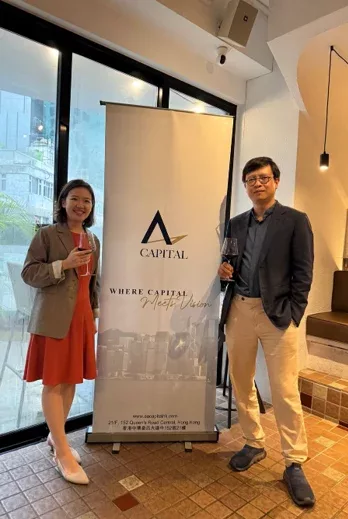
Mr. Alan Tse
BBA Accounting & Finance, 2002
Chief Investment Officer, AA Capital
I first met Alan through a friend, who introduced him as the brains behind the investment arm of Jebsen, a large 130+ year-old Danish family business that is headquartered in Hong Kong. During the interview, Alan takes me through his path through university, experience navigating career choices (and their outcomes) across multiple periods of economic turbulence, and how he has managed to stay successful to date.
Alan, thanks for making the time today. How about we start talking about your life and career aspirations before university?
Yeah, so I’m born and raised in Hong Kong. I went to Sydney, Australia for two years when I was a little kid. My family decided to immigrate there back in the 1990s, so I was there for late primary school.
Afterwards, I came back to Hong Kong, and I guess my Chinese was not good enough to keep up. So instead of going back to a local school, I went to an international school, an ESF school here in Hong Kong called Sha Tin College.
So which language are you most comfortable with?
I’m not a very good language person, but let’s say I can speak in both English and Cantonese. You probably don’t notice my Aussie accent because I haven’t really been back. I mean, I’ve been back and forth, but I haven’t been back in Australia living there.
Anyway, I did my entire secondary school education, then off to HKU. I did get an unconditional offer from LSE in London doing Accounting & Finance, but I’m the only child in the family, and so my parents just wanted me to stay in Hong Kong. Besides, HKU is also the university that my dad went to. He’s extremely proud and talks about back in the days, HKU was very different, which it was, right? I mean, back in the days, HKU was the only university in Hong Kong.
But by the time I got in there, obviously, the others (CUHK, HKUST) were quite fresh. HKU, the history, the heritage and all of that was and is still there. So I decided on HKU, BBA Accounting and Finance. And yeah, I spent three years at HKU, met with a lot of good people, from Jongs* (though I wasn’t a part of any Jong), alumni, etc, some I still am in touch with.
*Jong – executive committee of society’s/halls/clubs/student associations/other
Was that the same as what your parents did? What sort of industries were your parents in? And your thoughts on career before you decided to do A&F?
No, so only my dad went to HKU for Electronic & Electrical Engineering. So my father was an engineer by training, though later in his career, he worked for the Hong Kong government as a civil servant in the Environmental Protection Department. So more like policy-making later on in his career.
Before going to university, I was actually quite a big IT guy. Yeah, so before all this NVIDIA craze, I was already buying all these NVIDIA graphics cards, doing all the overclocking, building my own computer.
Were you a big gamer?
I was a bit of a gamer, though less so from actually playing games. I was just very interested in the power of graphics. So back in the days when computers were not as powerful, it’s actually a struggle even to get to just 30 frames per second on fast-moving video games. It’s a combination of the GPU and the CPU. And yeah, back in the days, I used to go to Sham Shui Po, build my own PC, pick my own CPU, motherboard, RAM, hard disk and all of that and build it.
So I have thought about doing IT or IT related subjects for university, but my parents were quite…let’s say, they are a bit traditional…kind of Chinese. So they wanted me to have a path where there’s a bit more certainty and there’s a bit more professionalism, like accountants – becoming for example, CFOs, getting on boards, etc, and having stable employment despite ups and downs of the economy. So my parents’ views were a strong motivation for A&F.
Got it. So back to university, what did you do for your career? What pushed you into your current career direction?
Internship was obviously also a big factor back in my days. I heavily utilised our career development center, for coaching and job vacancies.
So when I was at HKU, the first internship I did was with Deloitte. I did have a job at a family business in my first summer, through a recommendation from a secondary school friend, mainly doing data entry, administrative stuff, that sort of office work. But yeah, my first internship at Deloitte, which I found through the recommendation of a professor at HKU, who put in a good word for me.
Sounds like you did well academically!
Yeah, I was always sitting at the front in lectures. I think nobody wants to sit there! My strategy has always been that because professors always think that those sitting at the front row would not sleep, so they don’t pay attention to those at the front. Anyhow, that’s how I was memorable I suppose.
So what career did that get you interested in?
Yeah, I mean, I was pretty wide open when I was trying to look for my first job. Back in the days, I was very interested in investment banking. But it was and is still super competitive. Almost no student from HK universities got an investment banking offer. There may have been one in the year after me, and it was so rare that it got on the news! The banks really preferred fluent English speaking students, not even Mandarin. I spoke to a couple of recruiters, and they were stacked with CVs from Harvard, Cambridge, Oxford, so there’s no lack of applicants. I’m pretty sure it’s the same today, but I think now the dynamics has shifted a little bit more towards Mandarin.
I was one of the few lucky ones, actually, as I was invited to the Goldman Sachs office as a student. They hosted an event for students from all universities, but there were maybe 50 seats. 50 students got invited out of all seven universities in Hong Kong. I was pretty amazed when I got to the 68th floor of Cheung Kong Center. They had a Pacific coffee in the office and the view was obviously spectacular. There was also a bar!
So obviously, investment banking was one career option that I’ve considered. But unfortunately, I was invited to do the tour, got to know people, but I never actually had the chance to have an interview.
The other was management consultancy. But again, they very rarely took HK university students. I applied, but no interviews.
So when it came to career choice, right? I applied quite broadly. Banks, management trainees, big five accounting firms. (It was the Big Five back then!). But I didn’t get through the interviews and the aptitude tests for them except for the accounting firms, which I got all five offers plus another big six offer. So accounting was my destiny at the time.
It sounds like you put in a lot of work to get into investment banking/management consulting. Obviously you faced some real disappointment. How did you handle that?
It wasn’t a disappointment as such. I could probably have worked harder to understand, particularly, investment banking in general. But I was just keeping my options open. For my own family situation, I think my parents were actually quite discouraging of me to go into investment banking. They think these are not stable career choices, you know? “Why don’t you stick with accounting!” So they were actually very happy that I got only offers from the accounting firm, I was cornered!
OK! So then you have several offers on hand, but now you have to choose. How did you choose? Where did you go?
So Arthur Anderson was my clear choice, mainly due to my interviews and interaction with the people. I thought they clearly kind of stood out amongst the let’s say let’s call it the big five. But so I graduated in 2002 and as we all know what happened with Enron, right? So when I got the offer, the Enron news was out. And I was still trying to choose between Arthur Anderson and a safer bet somewhere else. But they really…I mean, even the most senior partner in Hong Kong took me out to lunch. Don’t quote me, but they must have had at least 500 people in Hong Kong. So that’s quite a gesture, especially as I was just a graduate. I’m really a nobody, right? And I really appreciated the time and efforts spent by this gentleman, right? I think his name was (Patrick) Fitzgerald, and when I met him, he was already very senior and he must be in his 50s or 60s already. So he told me no problem, the firm is run as independent partnerships so if the US goes down, nothing to do with Hong Kong, it’s very safe.
But I guess we’ve seen the history, we know what happened. And that’s how I learnt that in the services business, reputation is everything. So despite legally being completely fine and no crossover, the brand cannot survive, especially if something as big happened in a large market like the US. So I guess that’s one thing I learned? Reputation is everything.
So when I got to the offer deadlines, I already saw the news and knew that they would not survive. So it became a choice between PwC and KPMG. PwC, I quite liked them in the way that they are open, that people are more dynamic and talkative and maybe kind of a little bit like fitting my personality.
Whereas KPMG, people are more conservative, they tend to be more heads down to do the work.
If it was a personality match, I would probably have picked PWC. But I thought, you know, I’m probably not going to be accounting long term. So I want to learn as much about accounting as fast as possible. And therefore, in the end, I picked KPMG.
So when you made that decision, you already knew that you didn’t want to be in accounting. Was there any direction you wanted to take and what sort of inspired that?
CFO would be one type of route, or else into banking. So the audit experience that I had with the accounting firm was more of a stepping stone. That thought was further reinforced after I joined the company. I stayed with KPMG for two and a half years.
At your first job, what were the things that you noticed that people did well to get promoted faster or just excel at the job? What were the things that people who didn’t succeed as much or as quickly, what issues did they face?
Yeah, I think with the accounting firms in the first couple of years, the differentiation is not as large. You pretty much move on to the next step, like you go from A1 to A2 to A3 and then assistant manager A1, assistant manager A2. So you kind of progress every year unless you’re pretty much the troublemaker, the somebody who just doesn’t belong. So of my batch, maybe 150 or 200 people, I don’t remember exactly, I don’t know anybody who doesn’t get promoted. The sole differentiator was performance and the performance would be keeping your heads down, doing your work. Putting in very long hours.
So you worked at KPMG for two years and then…where next?
So then I joined a company called Techtronic Industries, a power tools company started by a German guy and a Macanese guy. The first office was in San Po Kong. They have a fantastic story from an investment perspective. What they did was they started as an OEM manufacturer, took advantage of the low cost in China, manufactured power tools to sell into the Western market. They started as an OEM and then moved into ODM, started to design stuff and own their own brand. Then they grew quickly through acquisitions of other brands.
I joined them in the corporate affairs department, not the traditional finance division. They considered me as a business partner to their legal function, as the Head of Legal couldn’t understand the costs spent on legal stuff. Why was there so much legal cost? Because a big part of the company was the IP the company owned, through proprietary efforts and acquisitions. We spent a lot of money on patents and trademarks, and dealing with these things…it’s a long process, from idea generation to whether it’s patentable, and seeing what our competitors already have, etc, and then deciding what we can register, where, and the related cost. So many variables that I’d work together with the finance department to bring transparency, like what is the anticipated sales volume of this product if it’s successful versus what is the cost, right? Which market would they be in? Should we register worldwide? Should we register US only or NAFTA only or whatever, right? So part of the role is that.
And then the other part of the role is M&A. My boss at that time was also from KPMG, but he was from the Corporate Finance Department. I thought it was a super exciting role, that it’s something that I’d like to try. And that’s what I did.
Did you know the nature of the role before you went in? How did you find this?
I mean, I was being told what the role is, but there’s always a little bit different what’s in it, right?
I was introduced to M&A, but also to the corporate environment and the dynamics between finance and commercial and legal. It was quite an eye-opener, especially as I had no corporate experience. I did that for two years, then left in early 2007, before the financial crisis .
That’s brave. How was the market then?
It was still a decent market, but it still took me a while to find the right job. I left Techtronic for a private pharmaceutical business, joining their actual accounting department as an analyst. I worked with finance control and the CFO, but really found that that is not a job for me. So I basically quit after 15 days or something. I’d rather look for something else.
It took about two-three months to find my next job. This time, I joined this consulting company that was founded by a few consultants and backed by George Soros, so pretty high profile. One of the founders was from McKinsey, used to be their Asia Pacific chairman, while another guy was from Capgemini, also Head of Asia Pacific. There was also this other guy from Accenture. It was a combination of management consultancy and IT consultancy. I think they started the year that I joined; I was maybe the 10th employee or something like that.
Anyway, the CEO, this guy from Capgemini, built a large business process outsourcing center in Guangzhou for his firm, maybe about 250 people. So what the company does, is we pitched to large companies, typically MNCs, to assess their back office functions, find efficiencies, and charge service fees for their use of our BPO functions. I joined as a corporate development guy, the guy who does all the grunt work. My bosses would go to see these CEOs, CFOs, whatever, and ask if they were interested in our product. I’m the guy who goes into the follow up meeting and talk to these guys about the technical details to make things happen, analyse their org charts, personnel details, identify costs, study their invoices, whatever. Then, put a proposal together, write up SOPs, service level agreements, etc and get the arrangements done.
That sounds very demanding and very different from your previous experience…how did you deal with the learning curve?
I think just by doing, working very long hours. And…if I were to have joined McKinsey or Accenture…I would never have been able to work directly with such senior people at such early stage of my career. So it’s a very lean environment, and I could work directly with C-suite and above. I think that was the first real job that I learned to use PowerPoint! Like, the right colour tones, shading, formatting, how a PPT should be done properly.
So yeah, I think I would say, I really learned a lot working alongside and closely with senior people. And the exposure…for one project, I actually spent nine months in Australia and New Zealand for one client. We did everything, the advising, the outsourcing, I was the lead manager to wrap up the entire package for them and assist in their transition process, workflow implementation…everything.
And as it’s a new company, there was very little reference material. Everything was built from scratch and by bouncing ideas off seniors, who were very experienced but also down to earth, hands on, and approachable. So I learnt a lot for two years.
Another two years? Weren’t you ever worried about being perceived as…jumpy?
Well, I joined the company but during my stay, the financial crisis hit, as you know. So Soros kind of said, “Hey, we’re not going to put more money into your company, because we’re stopping all non-core investments” and everything that’s in Asia is non-core to them. And at that point, we are still not cash flow positive, but we did have good traction and had grown from zero to 100 people, with 7-8 clients. It would have been a shame to just shut up shop…with this, I even had to become the investor relations guy! We managed to get a few prominent investors around town to invest in the company, and I also got to learn financial modelling in this process, to explain the company to investors. Investors, sometimes they don’t like to speak to the CEO, but the guys below, the people who can tell them the ‘real story’. So that was good for me.
But everybody called me crazy at the time, because I actually was with the company and went without pay for nine months. And that was the toughest period, you know, from early 2009. People were like, why did you do that? But I’m like, hey, I’m looking for a job, but there’s no job in the market, right? I’d rather go to work. Even if it’s for free, because I continued to learn and build experience. And maybe I might get my money back one day, but maybe I don’t.
Did you have any safeguards or stock?
Sure. I was offered stock, but it wasn’t worth much. It was a private company and already in financial distress. I did have some savings, but well. All my friends were using their savings to buy property right into 2009. Meanwhile, I’m using my savings to support myself and gain experience. I was sort of the belief that if you have the right skills the money will come. And when you can still afford it, it’s better to invest in yourself and try to to recoup it later in your career, which kind of turned out to be a good thing. I can say now that I’ve gone through this.
At that time, how did you deal with the stress?
Yeah, obviously if you go without getting paid, there’s stress, but I think it’s the same for anybody. I was lucky that in the end, I found a job that I also found quite interesting after. I mean, it was a shame that I had to quit the job that I really love, but I couldn’t really go much longer without paying.
Do you have any recommendations for people looking for a job in a tough market at that time?
You can see in Xiaohongshu and all these other experts online, right? Network as much as possible, talk to your seniors, talk to people, opportunities are always there, but it’s, you know, you may not know about it. If you only rely on headhunters, for example, or if you only go to the job boards…
I still recall at that time, going to the headhunters, so I went to one of these large headhunters and I said, “Hey, I want to look for a job.” They said, “Oh, your profile is super interesting. There will be something for you, right?”, and I’m like okay, good. But they only call you when there’s the right opportunity. And I met with one headhunter after the other to talk about the same thing. I even met with seven consultants from the same firm at the same time and was like “What’s going on?”. I mean, they should have the same database! So that’s how I knew just how bad the job market was, because the consultants have no jobs to offer and have nothing better to do, so all they did was tick the KPI that they met with a candidate. Why else would all these guys meet the same candidate!
I guess back in the days, I was less outgoing as I am today. So I didn’t know as many people, I spent less time networking. I’m still an introvert by nature, then and now. But I’ve worked hard on that. And network is important.
Oh yeah, I was also working too – not a nine to five, but a nine to eleven, without pay! Crazy right? But that’s how much I loved that job.
How did you break out from being introverted and only relying on consultants to developing skills to network?
By the way, I found my next job through a headhunter! But in terms of your question, that was actually further down the line, at my previous job with Jebsen.
But before I get onto that, rewind a bit. So I had left this Soros venture company, which also gave me a good background in investing, given the exposure. I then got my next job at Richemont.
Richemont is a globally listed, maybe second largest, luxury company in the world. They’re the owners of Cartier, IWC, Panerai, these sorts of brands. They’re probably the biggest in terms of watches while in jewellery, maybe behind companies like LVMH. I joined as the real estate guy, under the finance function.
The difficulty the company had at that time was…well, Richemont was the parent company, and they provided back offices, shared services (such as HR, IT logistics, Finance, etc) to all the brands they have. But not for real estate. So when Richemont had to lease locations in places like Landmark, Times Square, Harbour City, all these expensive locations, our brands would compete among each other for the same space. Which is nonsensical! Piaget and Cartier and whoever would all want the same space and bid it up! It just didn’t make sense internally, so our CEO at the time wanted a function to coordinate all of this, and approach landlords as a group. This group would consist of, say 10 brands. But then I’d have to coordinate who gets what space internally, so again, there was a lot of politics, internal arrangements, etc. So I was brought into this role as somebody who understands the business, the commercial side of things.
It’s quite interesting how you found very, very specific jobs. Whether it was Corporate Affairs or Finance or Real Estate, I can’t imagine that’s very standard. Did you manage to find out what these jobs were going to be like before you took them?
I can’t say for sure. At least for the Real Estate job, I did have such questions like, why would you hire someone with no retail, no real estate, no luxury experience. Maybe it was my personality. I say that because I sat in the finance function, and worked with our FP&A people to draw up a business plan. But those FP&A guys, they were either too rosy or too pessimistic. And they just sat in the office all day and never really got out to a store to actually understand, for example if a location is good. So I was hired to provide a more commercial perspective I guess.
I mean, I was also confused when I got hired, and I did ask. My boss said they had interviewed 100 people and honestly was looking for the right fit. The why was never really revealed to me, so in the end I think it’s just that they were looking for someone who was commercial, who would go out to understand the business, and piece everything together. They didn’t need someone to tell them how the luxury business was run or what a good piece of real estate was, but just someone that was commercial and could give everyone sound advice, dealing with questions like “should we open more retail shops or more wholesale shops, would opening a shop cannibalise existing business”, those sorts of questions. There’s very few people who focus on this type of analysis, so it’s super valuable.
How did you develop this commercial sense?
Well…it’s gradual. It’s hard to say. I think maybe because I was never in a traditional finance function, but was also in a finance function. I’ve always had half of each, and it’s important to have both. Because if I’m on the outside, the sales guys tend to exaggerate a little, as they want to get what they want and can always figure out how to get the business to deliver later. Meanwhile, the finance guys are, maybe too focused on looking after the numbers, maybe missing the bigger picture, something like that. So there’s always a gap between these two types of people I guess, and I was someone that had a little of both I think. So that was a good way to have a pathway up.
It reminds me that you did a job without pay for months, for the love of the job and the experience. Has this mentality of yours always been there?
I mean, a little bit, right? But obviously, living in Hong Kong, you cannot completely ignore the money part. I guess it was a bit strategic, I mean I didn’t work for nothing. I worked for the experience. And I guess the Richemont guys wouldn’t have hired me if I’d been sitting around unemployed for nine months.
So anyway, guess how long I stayed..
Two years?
Correct! Congratulations! Well then I joined Jebsen. Well, you know how I’ve been doing two years here, two years there, always two?
Oh, and back to your question about being jumpy. If there’s any issue, it’s always coming from HR. I think at the end of the day, if you are the hiring manager, you want to hire someone you’re comfortable with. That comfort doesn’t come from the fact that a person was with a company forever. Two is jumpy, but that’s still ok. You could take the flip side too – if you don’t move in two years, maybe you’re just not marketable as an employee, right?
Anyway, I went to Jebsen because there was an interesting restructuring opportunity, and I joined as their legal project manager. So Jebsen is a conglomerate with several business lines. In the past, this was managed centrally at group level. But then, the company decided that this does not make sense, and that it’s better to empower each business line and award them with more autonomy, to better handle the different industries they were in.
So they needed to hire someone to manage these huge projects in moving all the contracts, customers, suppliers, people from the group to the individual businesses. That was pretty attractive to me, so I moved over, thanks again to a headhunter.
OK, so with Jebsen, I was there for 12 years. But! I changed roles almost every two years. So still continuing that two-two-two theme. I was doing contract restructuring, but then I kept restructuring my own role – I went from legal manager to finance, then to head of finance within the automotives group, then to Jebsen Capital when the company set up its own investment team in 2017.
For whatever reason, I was lucky enough to be chosen to do the setup, alongside a guy we hired from McKinsey. We co-led this new function and built out the team. Initially, we were focussed on Private Equity, then my colleague took over responsibilities for that role, and I began doing everything else, such as bonds, public equity, private credit, hedge funds, everything. Each one is a learning curve…
You had to self-learn everything?!
Yes! I think in today’s world it’s easier because information is abundant, and I was lucky to be given the resources. In this world, you have all these expert networks to tap, so I tapped them a lot. Also, your counterparts, like the banks, asset managers, the GPs, they were all happy to teach, guide, point in the right direction…so back to your point about networking, I truly transitioned into this networking mode when Jebsen Capital was started.
Well maybe before that – I remember working with an Austrian business partner, and I had to sort out all our vendors and service providers, and I was already having to network there. But in the world of investments, my scope suddenly became so much broader, as there’s so many different things and people to talk to and about. You can speak to the portfolio companies, to your co-investors, to fund managers, basically the whole universe. Because investment encompasses everything, especially when, like us, we are a bit agnostic in terms of targets. I’ve looked at biotech companies, consumer companies, energy storage companies, so many different things.
Wait, just to rewind a bit, I remember you mentioned that you wanted to get into finance even as a graduate from HKU. Was that the plan this entire time or…?
Well, I think that has always been my thing. People actually advise that you should specialise in something. You should be very good at either finance or accounting. You need to specialise.
But I’ve always been more of a generalist. At least up til now, I don’t actually see the downside to it. I think I’ve really built a career based on being a person wearing different hats and being flexible. And I think that’s ultimately good for when you get to management, you need to not limit yourself to a certain function. You can’t just say you only know finance or you only know HR. And I think through the investing path that has really opened up this mentality for me.
I mean, for most of us who have just graduated, it’s really common to have a set mindset, like, going from analyst to associate, to manager, to partner or whatever, this very specific direction. What I’ve done is more of a…roundabout way of getting into what I think some people would find to be an interesting sort of role.
I see..moving on, I understand you’re not with Jebsen anymore? What have you been up to since?
Yeah, so I left Jebsen Capital last year. So again, I go back to my generalist role.
I feel like I love investing, it’s really an area that continues to be fascinating and interesting to me. But Jebsen decided to kind of change the portfolio into more like a hedge fund type of format, which I wasn’t comfortable running. So the option for me was to move into a more operational role. I thought about it, but decided maybe that I would like to continue my investing journey. I like working with people, I like building this network I have now, I wanted to try something entrepreneurial.
So that’s kind of what started this journey in 2024, I became kind of like a person working on multiple work streams. One stream I was working on was with an advisory firm, like a smaller accounting firm, which was founded and operated by a friend of mine. They offer the full suite of professional services, like tax planning, fund administration, all that. Their clients started asking questions around things like, M&A, financing, divestments, etc, but they didn’t have the capability for this internally and had to refer their clients to others. These are good revenue generating opportunities that the company was missing. So I opened a M&A advisory team for them, but kept costs low by building a small network of people that come together on an ad-hoc basis, and not on a full-time basis, and try to close these deals when they arise.
Another stream I’m working on, is kind of a multi-client setup. For my previous role, it was a single family office. We weren’t licensed and couldn’t take external money. But I enjoyed working with different people, addressing different financial needs. After speaking with many families, high net worth, I think there’s a big gap in this sort of market, as investing is so challenging.
There are very few Warren Buffett’s around us, and most people are busy with jobs, professions, pursuits. We sometimes rely on external professionals to manage our money. And sometimes, this isn’t done in the best way. Like, perhaps sometimes private banks just try to sell you the product with the highest commissions, or whatever their bosses want to push. But at Jebsen, I found that you really have to invest as though it’s your own money on the line. There are so many challenges, sometimes you see people that are being too aggressive, buying products that they don’t understand, not thinking about asset allocation…so that’s really the gap we’re trying to close a bit, helping clients who need better portfolio management services. So I’m working with AA Capital now, to build this sort of platform.
We already offer access to liquid products like equities, bonds, and all that. But there’s a big gap in terms of the private market space, where there is increasing interest in. We’re seeing this sort of activity increase in other markets too, like in the US and Singapore. There are other players in Hong Kong, but I think the demand is still largely unmet.
Why is Hong Kong slow in adopting these sorts of solutions?
I think Hong Kong is actually very developed in the institutional side of things. So pension funds, Jockey Club, there are a lot of good managers that these people get access to. The slow part is the middle, high net worth of around USD 10 – 100 million. These guys don’t get served as well by the institutions, which I’ve spoken about already.
I do think Hong Kong is catching up. But if you look at, say for example Endowus in Singapore, they are primarily in liquid but also moving to private side offerings. From them, you can get the advice and pointers you might need. So clients that need this sort of service are the people we’re going after.
I guess you’re planning to do this for two years too?
Let’s see. I think the opportunity is big, but to get it right, it may take a long time. Private markets are really different, it’s really the long game. If you look at the successful private market players, they’ve been here for 30, 40, 50 years? This success takes a long time, because you really have to build relationships with these managers. And if they are good, sometimes they don’t even open to the public, you can’t even get in any more – maybe you can only come in when someone else redeems, or there’s a cap because of a particular strategy and you don’t want to sacrifice performance for size. Sometimes, you need a relationship just to get on the wait list. So sorting out all these things with our platform requires time. So if we’re successful, it will not be for two years.
Good luck. I think, finally…what recommendations do you have for people who are just graduating, and embarking on their careers? What advice would you give to your younger self, or how would you have approached your career differently?
I think you need to be honest with yourself. Everybody is different, and sometimes there is advice you should listen to, but sometimes it may also not be applicable to you.
I think you should constantly be looking for challenges. It’s a bit too trivial to just look at this guy that changes shop every two years or look at this guy that stays on at the same job for 10. Or even be at the same company for 10 but have different roles. Maybe it’s not healthy to stay in the same place for 10, because that may mean that you’ve not been growing.
So maybe for graduates, my recommendation is to look at how you can grow. Know your strengths and weaknesses. And work on addressing your weakness. For me, I was never a very outspoken person, I’m an introvert. So then I should work on that and kind of force myself to go out and network and speak to different people, because you can always learn something by speaking to different people.
Oh and don’t be too worried about how many jobs you have or what areas of expertise you’ve developed, as long as you’re developing yourself. In today’s world, it may be good to specialise, but having options is also important. When you’re younger the top jobs of the world are appealing, like tech, investment banking, consulting. But not everyone makes it to the top. Most people, like 80, 90, 95% who go to investment banking actually drop out along the way to the top. So maybe it’s important to consider developing other paths, like in a corporate setting, or in becoming an entrepreneur, or setting up your own fund, or whatever. Different roles, different doors. So being a generalist can also be important.
Be open-minded, honest with yourself, and know what you’re good at and what you’re not good at. Be aware and choose a career for you to spend your time on. Develop your strength and address your weakness.
Thank you very much.
Alan is currently CIO at AA Capital, a multi-family office with a focus on alternative investments. He also serves on the board of listed companies, and as partner and advisor to family office and advisory firms. You can connect with Alan on Linkedin here.