
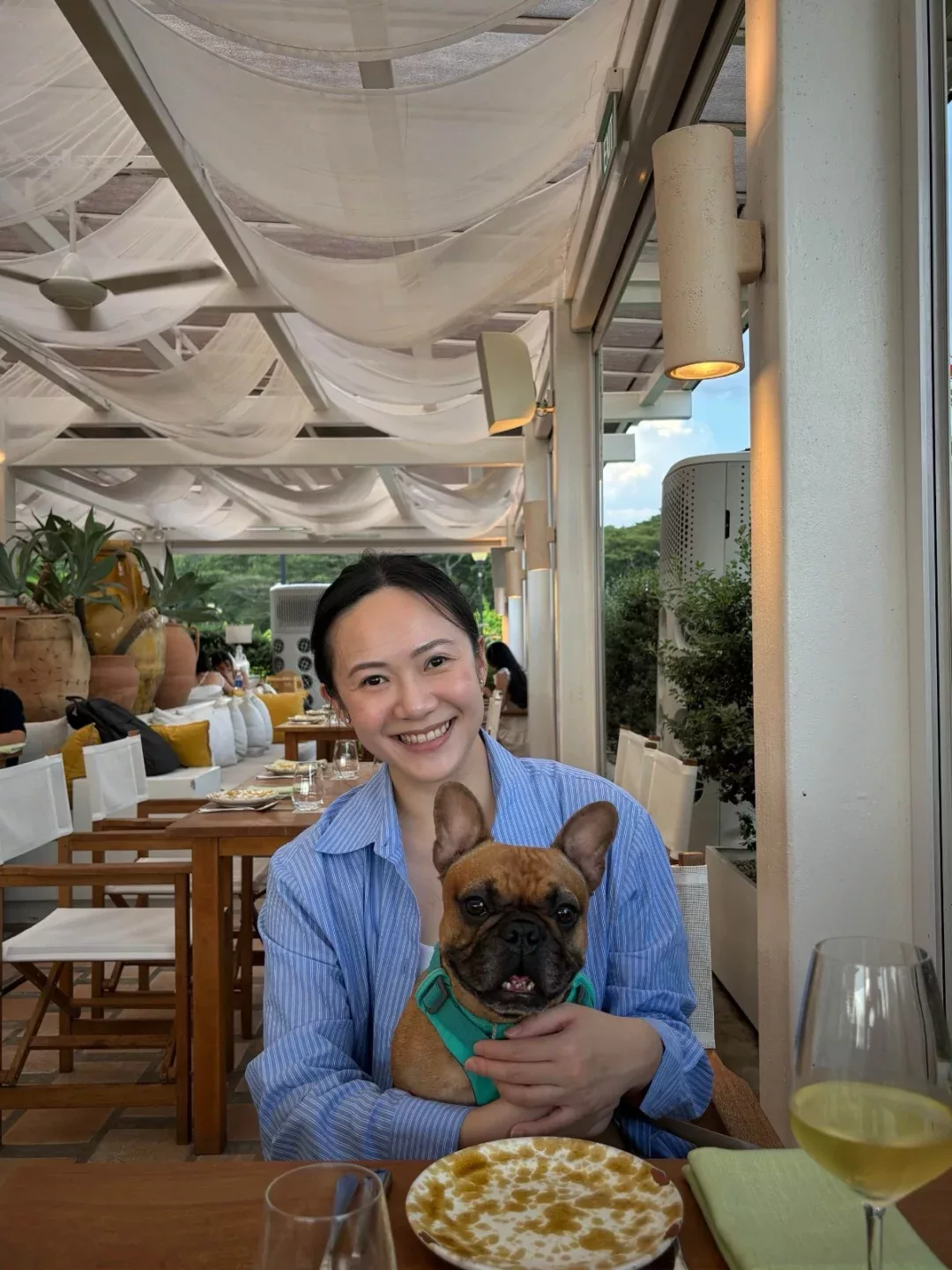
Ms. Belle Lim
Head of Sales, Omni HR
Bachelors of Economics & Finance, 2015
Belle Lim is a university classmate of mine in Economics & Finance and, from my vantage point, a key member of the Malaysian batch of 2012. In this conversation, we go through her story from getting into HKU, dealing with all the career-related hassle in getting into the banking world, and then heading off into the startup universe.
So first of all thank you for making the time today to speak to me. Before we go into the meat of the interview, I just want you to give me a brief self introduction. So who you are and what you do nowadays and whereabouts you are.
Hi I’m Belle and I’m currently the head of sales in the early stage HR tech startup in Singapore. It’s called Omni and I’ve been doing this for about three years now. Before joining Omni I was in finance, mainly in the wealth management space!
Okay, fantastic. So before we get into that we want to dial all the way back to before university. So what sort of upbringing you had, how your early life was, and how that set you on your path towards where you are now, career-wise.
Got it. So I spent most of my childhood in Kuala Lumpur Malaysia, I’m a Malaysian Chinese. For the first 18/19 years of my life I was there, then I did my A-levels, then applied to Hong Kong University.
Going to Hong Kong has been one of my top choices for places to go to for university. To backtrack a little bit, I’ve always been fascinated by the roles of entrepreneurship and finance. So I always knew that I wanted to pursue a career in business, as well as marrying this with the idea that I wanted to stay in Asia after I graduate.
So I thought that going to Hong Kong would be a good place for me and that’s how I ended up at Hong Kong University, doing economics and finance.
Sure. I just wanted to ask actually, so you say you were interested in business from an early point in time. Was it because of your family or was it that you knew friends or relatives that were nudging you towards this track?
Yeah, my parents are quite entrepreneurial and they have their own business. And they talked a lot about it, over dinners or family gatherings. So it made me think a lot through the lens of a business owner.
Fun fact! One of the earliest businesses I’ve run was actually trying to sell my second hand books at school. So that was my first encounter with trying to sell something at a higher price. What I also expanded it to was not just my own books but also selling my friends’ second hand books and just trying to make a profit out of that.
So that was interesting to me! I mean, it was a little bit like playing around as a kid, but that also really sparked my interest in the world of business and finance.
Okay so it sounds like you were very interested in entrepreneurship at quite an early age. So what made you choose economics and finance for university and not something like business administration?
Right. I made this decision when I was doing my A-levels. That’s the point when I compared several business courses and decided that I wanted to develop a deeper understanding of the world of business through the lens of economics and finance, and the factors that drive how the markets work.
So to me, that’s important. And at the same time, I did have a slight interest in finance as well. When I was 19, I thought I also wanted a career in banking, so I thought this degree would be a good combination of both worlds for me.
Okay and during your university career what sort of internships did you do? How did you find your career path for when you graduated?
Yeah, so I was still going through the three-year program then, so that means I effectively had two summers.
During the two summers, I did two different banking internships.
One was at Alliance bank in Malaysia. So Alliance Bank is one of the more popular SME banks in Malaysia and I actually got into their summer internship programme in their corporate lending division. My second internship was with HSBC private bank in Hong Kong.
Okay and did that push you towards what you wanted? For after graduation, I assume you went into banking then?
That’s correct! First of all, I was motivated enough to want to continue my career in banking at least for the first couple of years, so there were only some different divisions that you could choose from.
Across investment banking, corporate banking, retail and private, I was most intrigued in private banking especially after the three months with HSBC. That led me to my first full-time job at Deutsche Bank as a private banking analyst.
When you were looking for your first job, what sort of challenges did you come across and how did you overcome them?
Back then, and probably now as well, I’m not sure how it is now, but finance was a highly sought after career and industry for people to break into. It’s always super competitive.
The challenge is how do you want to make yourself stand out from the competition across all these CVs that your hiring manager might go through. So there were a couple of things that I did. Number one, obviously, is to do a lot of very relevant internships to pave my way and make myself more relevant in the eyes of hiring managers.
And number two is to actively participate in a lot of the events that the banks host. When you’re participating, just make sure that you are active because it is true that through those events, that’s when the bank will try to take note of any interesting candidates. And knowing that now, it really helped me to stand out and give me the chance to actually interact with the banks as well to proceed with the next steps.
Okay so now you’re at Deutsche Bank and it’s your first year. I imagine going to the workplace full time for the first time would be very different compared to university. What sort of challenges did you meet then in your first year and how did you accelerate the process of becoming an effective full time employee?
It was a lot about managing the shift from being a student to being an employee. It is very different having certain set deadlines to complete assignments versus actually knowing that the tasks and assignments actually affect the company’s business and how it’s perceived by our clients and all of this.
Hmm, maybe what I’m getting at is how one goes from being a fresh grad, where there’s loads of new concepts and it’s very hard to adapt to a very fast pace sort of environment, to becoming someone who’s very confident in what they can do and being able to contribute in your role.
Two things really helped me. Number one is that being part of a structured program in a bank has helped me a lot because there was a lot of continuous training to actually welcome the new grads into the organisation. So that has helped me get moving from a student to a full time professional.
And two is that it is important for you to spot sponsors and mentors early on in your career as well. Not just the people that you work with, but you could also be like a sponge and continuously absorb the different things that people might tell you to help you excel in your role. That really helped me.
And so then you were at Deutsche Bank for how long?
I was at Deutsche Bank for about two and a half years.
Two and a half years. And then afterwards you, where did you go next?
So after that I got an opportunity to move into a multi-family office in Singapore. So that’s how I moved from the sell side at a private bank, to the buy side at a family office. I feel that my incentives were more aligned to the client’s interest. And that got me into a family office in Singapore.
Okay. For some of us, we may not know this, but what cultural differences did you observe? Both A) from moving from Hong Kong to Singapore and also B), from moving from the sell-side to the buy-side?
Yeah. Let’s talk about Hong Kong and Singapore first.
So when I moved to Singapore, I was around 24/25. Then it was a very big contrast in terms of lifestyle changes, Hong Kong was a lot more vibrant and fun compared to Singapore. I mean the stereotypical way that people would describe Singapore is that it’s a lot more structured and family-friendly. Your lifestyle is going to experience some changes! But on a professional level both cities are a great place to be if you are in banking or finance.
In terms of sophistication of the organizations and everything, I think they are pretty comparable. It’s just that maybe the clients that you deal with might be slightly different because of the geographical reasons.
And in terms of the working culture, how did you find much difference there?
Yeah. For me it feels like the working culture, it’s very strongly influenced by the local culture as well. I mean both cities are obviously very international but you do find a higher proportion of local talent in each city.
For example in Hong Kong you have to work a lot more with Hong Kongers, while in Singapore, Singaporeans. And then you will notice that in Hong Kong people are more direct, and sometimes direct means that you need to have a very high emotional tolerance as it could be quite scary, especially for young professionals, to actually receive very direct feedback from our seniors. But that ‘s all with good intentions. So I think that’s the working style of Hong Kong.
Then in Singapore it’s slightly different. I think less direct, a little bit more collaborative but the downside is that sometimes people don’t tell you straight away where you think the gaps are. And it means that you really need to have a lot more self reflection to actually figure out what’s going on.
Okay and so now you’re in a multi family office. How long were you there for?
I was in a multi-family office for about two and a half three years also.
And then after that you went to where you are now?
Not immediately! So COVID was at the end of my finance career as well. I spent a lot of time at home to also self-reflect and think about whether there was anything that I was curious about. Going back to what I originally wanted to do is that I really wanted to own a product and do the business. So that motivated me to actually try to build my own company in the creator economy space. That didn’t really take off, though I learned a lot from it. I spent about one and a half years in that space and decided to move on and join another early stage startup, which is Omni right now.
How did you identify the opportunity and what were the challenges of building your own startup?
I’m always trying to search for the next idea or something that I’m confident in building that also fills a market gap. Back then, for me and my co-founder, we were very fascinated by the live-streaming industry in China.
That’s growing really fast at that time and we were thinking of potentially riding this creative boom so I wanted to do it in Singapore as well, as we noticed that there’s a growing market of local creators wanting to connect with their audience through their creative content.
And in terms of the challenges, what worked and what didn’t, if it’s okay to share?
What I’ve learned is that as a first-time founder, sometimes you might be living in your own bubble and there’s a lot of confirmation bias by the information or the materials that you read about. That becomes so closed off to what you’re trying to build and you might spend too much time building it.
So the first challenge is that it is important to just build an MVP as a prototype and try to see if there’s a market for it before investing too much time on that.
Sorry MVP?
Yeah, basically MVP is a minimum viable product.
Okay.
Minimum viable product means it’s a basic version of your product that is good enough for you to put out in the market quickly, without spending too much development resources on it prior. This allows you to test the market if there’s a demand for it.
And then secondly it’s also about experimenting and moving really quickly. So those are the things that I’ve learned as a first time founder.
And you were doing this part time or by that time were you full time on this project?
I was full time on the project actually.
Okay, Okay. So that’s quite brave then! You went from a family office which sounds like more of a stable sort of experience and then just jumping straight into your entrepreneurship gig.
It is! I took a leap of faith and a huge pay cut obviously. When you’re an entrepreneur yourself you basically don’t take any salary so it’s a lot of adjustment to do but in hindsight it has brought me to where I am now. I’m very happy that I have since transitioned from finance into the world of startups now.
Of course. So now you’ve joined Omni. Actually, if you don’t mind me asking, how long was the gap between you deciding I need to stop my own startup and going to Omni? Was there a gap in between?
There wasn’t really a big gap. So me and my co-founder, we were working on the idea for about one and a half years. We really threw all we could into the idea and it didn’t fly. And that’s when towards the end of it I decided to start looking out for other opportunities. And that’s how I found Omni as well.
So Omni can you tell me what Omni does and how your experience is so far.
Omni is a multi-country HR platform that is designed for Asia. So we are solving a very specific market gap here whereby a lot of systems locally are very focused on certain modules in HR, such as payroll. As the company grows or they realise that there are other things that they want to automate as well – that’s when Omni, being an Asian grown product, actually makes a lot of sense for the companies to consolidate their HR processes in the region.
Okay. And how old is it roughly?
We’ve been around for about three years now.
Ah, so you’re quite close to being like, top five employees then?
Yeah. I was the seventh of eight if I remember correctly. I was the first sales hire in the company.
So it sounds like you still have quite an entrepreneurial role?
Definitely. Three years old for a startup is still at a very early stage. We just announced a funding round last year. It’s great to raise in this climate but there’s just a lot to do and every day just looks different. There’s always a new problem to solve.
Do you have any young employees in the company?
Yeah. I was just joking to my colleagues yesterday at our team dinner that I’m definitely one of the older ones.
Oh wow okay.
Yeah so on average, our company has a pretty young workforce. So definitely work a lot with your younger millennials and Gen Zs too.
What sort of issues do you see them having and if you…say for example, you had a young employee that’s
recently joined and they asked you (on how to adapt) what sort of advice would you give them? What have you observed that is a major challenge for them in terms of being able to fully realise their potential at the company?
So first of all, even in the hiring process, we are very clear in terms of the kind of people that we want to bring into the company because the company is still pretty young and lean. We are still around like 50 employees. Not big. So we need to make sure that everyone that we bring in, it’s someone that understands what we’re trying to build and would like to be a part of it.
So regardless of the generation, or age, motivation will be the most important factor here. And of course when they join the company, most of them do not have much of a challenge trying to actually grow quickly into their role. One thing I observe…I mean again it might be a bit too stereotypical…but I do find that the younger generations are more aware of what they are looking for in terms of their career. That kind of clarity helps them decide whether the role is for them and how much effort they want to put in and both parties are very clear about this going into this agreement of an employer and employee arrangement.
Ok. Maybe one final question – if you could boil down your career so far, what would be the biggest piece of career advice you would give to someone who’s recently graduated.
I feel that it changes at every stage of your career and what you are trying to solve, or in your life as well, career is just part of the piece. But what is true though is to be very clear of what you are trying to achieve at each point in your career and having that kind of clarity would help you figure out whether what you are doing right now would contribute to that. And if not, you could just move into another role and not be afraid to try new things. It doesn’t matter where you are at right now in your career, if you are curious about another opportunity or industry, I’d say go for it.
Sure. Okay, thank you very much.
Belle Lim is currently Head of Sales at Omni, based in Singapore. She may be reached on Linkedin here.