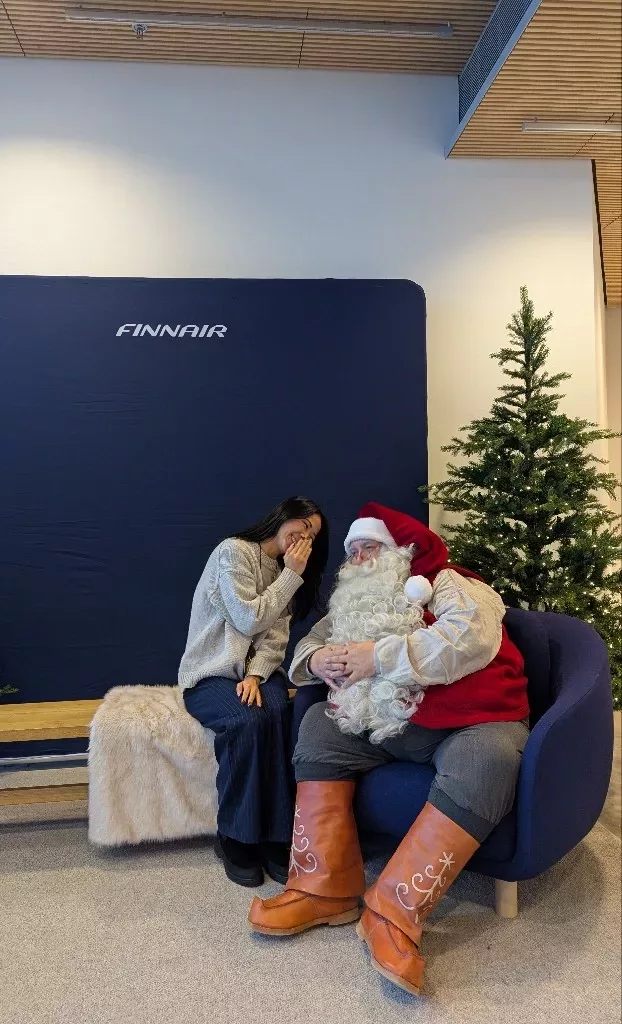
Ms. Jennifer Elizabeth
Digital Product Manager, Finnair
Bachelor of Business Administration, Accounting & Finance, 2015
Jennifer was in the same cohort as me, entering HKU to do BBA Accounting and Finance in 2012, though it’s thanks to Belle Lim (see our conversation here) that we got to meet, albeit online. In this call, we go through her story which starts in Indonesia, multiple detours through Hong Kong and banking, before finding her passion for tech and product management, which takes her now to a life in Finland.
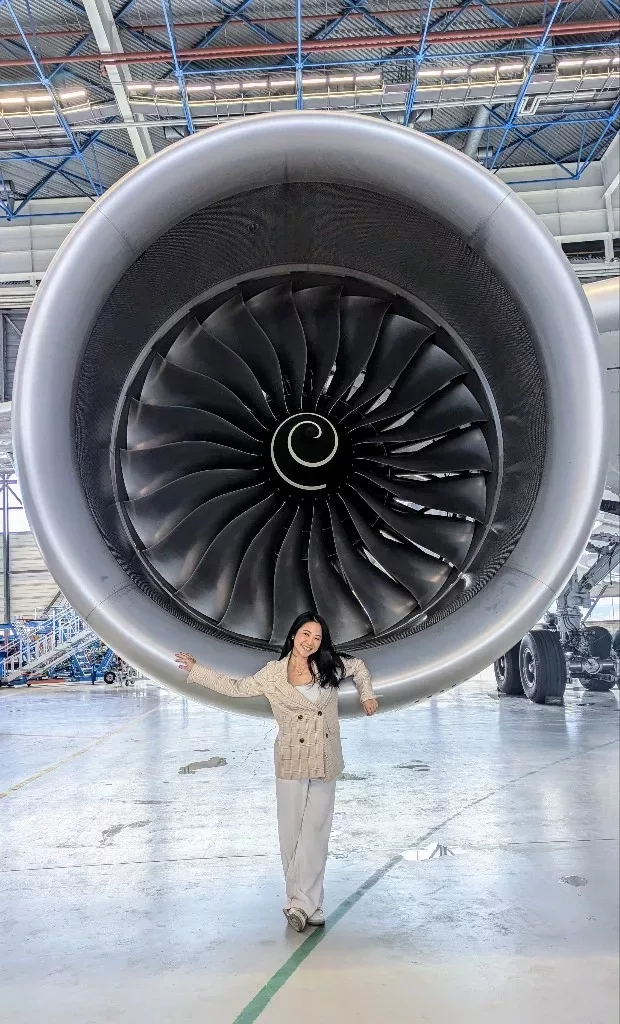
So let’s start! Can we learn a bit more about yourself, who you are, where you are now, and what you’re up to?
OK, so I studied at HKU – I think we’re around the same batch – I was in the three year accounting & finance programme, starting in 2012 and graduating in 2015. I’m originally from Indonesia, but I’m currently in Finland. Even though I studied accounting and finance, I have been doing something completely unrelated for the past seven years! I’m now at Finnair, the national flag carrier, as a Digital Product Manager. I’ve been there three years now, but I was actually working in Hong Kong for a bit before that. I’ve bounced around a lot – I was actually in Hong Kong at the start, then went back home to Indonesia, then Singapore.
That sounds like one of the more out-of-the-ordinary experiences I’ve come across, which is really nice. Before we unpack that…let’s rewind a bit. What was it like growing up in Indonesia? What factors influenced your decision to take A&F at HKU?
So for me, I’ve always been interested in the business side, but during high school, I wasn’t really sure which area. My mum has always been working in finance, and she’s a huge source of inspiration for me, especially in terms of career choices. She was the one that really guided me into studying A&F. At the time I made that decision, I was still quite young, so I just trusted her advice!
Accounting provides a pretty good foundation because it teaches you the ins and outs of business. It also gives you the flexibility to manoeuvre across different areas of business, so that’s why I took her suggestion, even though I enjoyed other subjects as well, such as Economics. I didn’t really have that strong a preference for a particular subject.
To begin with, when I started my studies, I was really set on working in finance. I didn’t know which part, but finance was what I wanted to do. So working in tech wasn’t part of the plan!
So when you said your mum was in finance, what sort of area was she in? Also for your environment, like your classmates at the time, were they also interested in business as well? Or were you an outlier?
My mum worked in different areas really. Her last position was in audit, but before that she worked across many different functions in corporate, risk management, etc. So she’s pretty all-rounded. As to my classmates, I wouldn’t say I’m an outlier, but there wasn’t really a popular career choice for my circle of friends – they all had their own ambitions. There were people who wanted to work in finance as well, but I think it wasn’t as common as in Hong Kong, because it’s such a big financial district that everyone just wanted to work in finance. This wasn’t the case in Indonesia, even though it’s quite a fast-paced environment as well.
So on graduating high school, what were your picks – Hong Kong, Singapore, staying in Indonesia…?
Actually, HKU wasn’t my top choice either! I was quite set to go to Singapore – that was my dream at the time. I knew that I wanted to stay in Asia and Singapore was my top choice. I eventually got the offers that I wanted, from both Singapore and Hong Kong. But I remember the day when I received the acceptance letter from HKU, it came as a physical letter, and I just remember that the excitement was very different. I was really, really excited when I heard that I got accepted, more so than for the offers I got at other universities.
I suppose Hong Kong at the time was so vibrant, there’s so many things to do – the nature, things to see…and I thought the exposure also, to the Greater Bay Area, for example, this really felt like an opportunity to experience new things and make new friends. I guess it’s also because…Singapore to me is quite close to Indonesia, and I had been there a couple of times, so maybe it felt like there wasn’t that much more to explore as it was so familiar. Whereas for Hong Kong, I had only been once before moving there, and that was such a long time ago. So there was this aura of mystery that I really wanted to explore.
Or maybe because I was still quite young at the time, I felt that as I was more excited to go to Hong Kong, perhaps it was some sort of sign. So that’s what I did!
So then you get into HKU in 2012, graduating in 2015. What sort of things did you try during your university experience there? And what sort of things pushed you along on your career path?
So first of all, I did a series of internships. During my first year, I interned at DBS doing marketing on the consumer banking side. But I soon realised that I didn’t know enough Cantonese or Mandarin to succeed in this role. So though I really enjoyed the experience, by the process of elimination, I knew that I should explore something else.
During my second year, I attended a HKU-Citibank joint programme, like a banking course, and I was fortunate to get a placement at Citibank Hong Kong. It was great, and I really recommend it, if it’s still around! They put me in the finance department, and there wasn’t much of a language issue there. But in the end, I wasn’t really sure if I would enjoy the back-office environment either. Truly a process of elimination!
So I began to think of other roles, investment banking for example. But I found that it also required Chinese language skills as well, so it was kind of tricky for me. As I wasn’t really sure of what area to be in, just not in areas such as back office, for example, I began considering management trainee programmes instead, as they would give me more opportunities to rotate across different departments. That way, I could get a bit more exposure and find out what I really liked.
So I started applying to different MT programmes. But I was also realistic, I considered the possibility that I might not necessarily get a role in Hong Kong, so I decided to branch out in search for more opportunities, and began applying back home, to companies like Standard Chartered. So that’s how I moved back home – I got into Standard Chartered’s global MT programme. They have this programme in Hong Kong and Singapore as well, which I really recommend – you get to rotate through different departments, find out what suits you and what doesn’t.
As to the courses and talking to professors and the general university experience – even after graduating I didn’t know what I really liked! Looking back, one of the mistakes I made was that I followed the crowd a bit. Like the investment banking crowd – I ended up telling myself that I should do that too! I should have been a bit truer to myself, looked inwards, and see what I really liked. I didn’t really do much of that – even when I was close to graduation, I didn’t know what sort of banking I really wanted to do. I felt like for the first two years, everyone wanted to do consulting at MBB, or IBD, so I just wanted to do that too. But thinking back, that wasn’t right.
No, I can empathise with that. It was the same for me as well. You also mentioned that you weren’t true to yourself – does that mean you had some thought deep down that banking wasn’t really for you?
Actually no, this is another lesson learned. During university, I was too fixated on banking, finance, and consulting. I should have broadened my horizons and explored other industries as well, and give myself more options. Looking back, if I wasn’t so fixated, perhaps I would have gotten into tech a lot earlier. I made the switch about two years after I started working…so I should have kept my options open. I kept thinking “I want to do that”, and obviously with how competitive it is, I was putting so much stress on myself to get good grades, good internships, networking, ace all the interviews, do the case studies…
So if you were to do it all again, what else would you have done to explore more options?
Looking back, three years was such a short time. I would have opted for a four year programme, because it does give you some breathing space, some time to look inward and find what you really want. In my first year, I only attended recruitment talks conducted by banks, but I could have done more, attended different social mixers, and hung out more with people outside of just the business faculty. I mean, I did, but I could have done more, to understand a world outside of just the banking, business, finance sort of track.
Oh, another thing – when I was picking internships, I focused a lot on the brand names, thinking that this was super important. But that also narrowed my options too much, I really should have been open to a variety of choices, whether it be names or industries. So flexibility, less perfectionism.
I think this is a pretty sound point, particularly as we see these prospective graduates and interns nowadays – really doing 2, 3, 4 internships in investment banking, research, but maybe not sacrificing one or two of these to see what else there could be. Especially if you find out too late, say 10 years down the road, it’s harder to get out of the industry for an alternative. So that’s really helpful to consider.
So back to your first job, how was that experience? And how was it like working in Indonesia?
So first of all, the programme should have changed a lot by now, so disclaimer.
But yes, it was a really exciting experience – in the first month, they sent everyone to Shanghai for a month, including from Hong Kong, Singapore, the UK, the US…within that month, my network, I don’t know, quadrupled? And I got to meet colleagues from all over the world. So it’s not just that you get to learn a lot, but you get to have some fun in Shanghai as well. You’ve lived there, so you know how fun it is!
For me, I was in the commercial banking side, which was an interesting aspect in Indonesia, because the SMEs there were really up-and-coming, really thriving. I got to talk to small business owners, as well as small to large corporates, which was really exciting.
I also rotated through front and back offices, it was kind of a hybrid role. Funnily enough, my final placement after going through that programme was in a totally new role in the regional office in Singapore. It was totally unrelated to my programme experience!
Sounds like an amazing time! So what was the newly created role in Singapore like? Did you even want to end up in Singapore?
Actually, coming back home and doing the programme, I was always deciding between staying in Indonesia or going somewhere else. After the programme, Standard Chartered lets you apply to any of the open roles worldwide within the bank, so that gave me a lot of options. When I finally had to make the decision, I did get an offer in Indonesia, but at the same time, I really wanted to take the risk of moving elsewhere. For me, there wasn’t much to lose, so I gave various roles around the world a thought. I was fortunate enough to get multiple offers for different roles globally. But in the end, I chose the one in Singapore, because I felt that it was the most interesting.
That position was called ‘Commercial Banking Initiatives’, and I worked in the CEO Office, sort of like an internal consultant. It was quite an interesting role, where you could meet a lot of people, but also get to do a lot of your own research and analysis. It was a nice mix of both, which was attractive to me.
Just to step back a bit – you mentioned that you had been gunning for investment banking roles. So how did you adjust to go into a different field like commercial banking?
I feel that sometimes, I may be a bit of a perfectionist regarding this sort of thing. It was frustrating for me, not being able to get into those sorts of roles in Hong Kong. But it is pretty hard to do so, if you don’t have the language skills in place, it’s just a tough spot to be in compared with the competition.
But when I got the role that I did, I did find it to be quite a good one. Me being who I am, I was a little bit sad about not getting into investment banking, but I quickly realised that firstly, you can’t always get the things that you want, and also that things happen for a reason.
Looking back, when I got that Singapore role…I really didn’t expect that I’d go back home and then move to Singapore for a job. You never really know where things can take you, and there’s always a reason why life puts you in that spot. So I recovered from the disappointment from not getting an investment banking role in Hong Kong quite quickly as I tried to look at the bright side of things. And when I began that job in Jakarta, I had moved on – I was excited and motivated for it.
That’s a really good mentality to have. OK, so now you’ve arrived in Singapore, but then…I see that you changed jobs quite after less than a year What gives? Sorry that this sounds a bit like a job interview question…
At the time, I really looked inwards and thought about what I actually wanted to do. I did enjoy the work at Standard Chartered, the people were nice, and I was learning a lot. I really enjoyed being a part of that team. As the youngest person there, I could look around and see so many things to learn from the people around me.
But I really wanted something more. I realised that maybe I should start looking outside of finance. And in Singapore, there’s a thriving tech scene there. So I started to go to different networking events, talk with tech startups, and start hanging out with people outside of finance as well. That’s what inspired me to start looking outside of finance.
I then started applying for jobs in tech and also in other industries. One of the companies that came back to me happened to be in Hong Kong! So life took me back to Hong Kong again.
Just a quick question around wanting something more out of your career. That sounds quite tough. What did you think was the reason behind that?
Well, that’s not to say that Standard Chartered wasn’t a fantastic experience, but we were doing a lot of different initiatives at the time, providing advice on what to do from a strategic perspective. But after giving recommendations, the question became – what’s next? I wanted to do something tangible, see if the recommendations were followed, see the result of my work. I wanted to make a tangible impact somewhere. So I think I was looking for that a bit more – an answer to the question of “why are we doing this, if we don’t see the impact?”
Yeah. I guess finance is also pretty structured in terms of career pathway, whereas tech is a bit less so. How did you deal with moving from a very structured environment in a bank to one that’s less so?
Actually, I didn’t worry about this too much. The main difficulty was the fear of starting over. Obviously, when I switched into tech, I also took a huge pay cut, which was quite demoralising at first! Starting over, learning things all over again, that was quite tough. There were some skills that were transferable, of course, like excel modelling, presentations, etc. But the industrial knowledge was so different – I had never talked to engineers before. So starting over, taking a huge pay cut, these were the scariest things, though for the pay cut, I figured that I was still very young at the time, so it was slightly better. My parents also really backed me up, so there was a safety net for me. I was fortunate that they were still willing to support me.
Sounds like you dealt with it quite well then.
Now, you’re back in Hong Kong at Prenetics, a company I know only too well from covid…tell us how you found this job? And about the change in environment?
Yeah, when I started this job, it was still very much a start-up. It’s not so obvious now – the company has grown so quickly, and it’s already listed on NASDAQ. Fun fact, I actually applied for a completely different role at Prenetics, but the CEO (Danny Yeung), we had a pretty good chat about what I wanted to do and what my interests were. I told him about my interest in product management – I learnt a lot about this through attending networking events in Singapore. He acknowledged that I didn’t have that much experience, but I think he saw something in me and took me on for a more hybrid role – kind of like a rotation programme – with a focus on product management.
So I was helping out different teams here and there – for example, the Quality Assurance team, the Health Coach team as well…it was quite a few rotations, kind of like the Standard Chartered programme, but at a startup.
There wasn’t too much of a culture shock moving to Prenetics. I had already decided to start anew, and be like a sponge: absorb as much as I could and try to learn as much as possible. Admit that I knew nothing and start from the beginning. This mindset helped me a lot, as I didn’t have any unrealistic expectations. This helped me do well in my job at Prenetics.
What was really different there was that each day was experimentation. The day to day, week to week was really different, and we would be constantly trying out new and different concepts. As someone who was young, I found it really exciting. The environment was very dynamic, I could see things moving, and I felt that I was making a tangible impact, which I was hungry for. I had a great time despite the crazy hours we put in, but I got to work with really inspiring people that I learnt a lot from. They’re very hardworking and very motivated, and that inspired me to also work hard and to be motivated as well.
And coming back to Hong Kong, how did you find that?
It felt like coming back home again. It was nice to reconnect with friends. One of the things that I treasured the most from going to HKU was the friends that I made. I’m still in touch with most of them! I was familiar with everything, most of the people that I knew were still there, it felt great.
Lovely. So you were at Prenetics, then Lynk Global in about a year. What was Lynk Global like? And why the quick change?
When you work in tech or startups, I see people jumping around really quickly, unlike bigger or more established companies, because of how fast-paced it is.
Lynk is a SaaS expert network platform, though I think they’ve since pivoted a lot since then. During my time, we were in the stage of building the platform for big corporations such as consulting companies, to be able to allow them to find experts that they may have needed to consult for their projects via our software. They could use it to book a consultation with experts, who could help provide insights in niche fields, whether it be trends, or datapoints, or industry-specific knowledge. So that was the setup with this business.
My previous manager at Prenetics moved there, and he brought me over. He was one of my mentors, and I very much admired him. So when he decided to move to Lynk, I was pretty sad about it. But we stayed in touch, and after a while, there came an opportunity to move to his team at Lynk. And of course, I said yes! Lynk also had a pretty interesting roadmap too, and I felt it was a good chance to step up from my product management role to something with more exposure. I was actually looking to get more exposure in the specific products that I was managing, so this was a great opportunity for me. Having the right manager, the right mentor, was a big pull factor.
I saw that you were there during COVID too, how did you manage that period?
Not too much. Fortunately, we were more of a startup, so we were able to change our working setup quite quickly to adapt and change to a remote or hybrid setup. The transition was fine for us – I don’t recall it being a struggle.
And moving to a more senior role?
I think the product coverage becomes broader. When I first joined, I was only managing the expert side of things, such as the onboarding and signup experience . After getting promoted, my coverage area expanded beyond that, such as automating the end-to-end scheduling tools. So I was now looking at things more from an end-to-end point of view.
I was also working more with a junior analyst on various projects and mentoring them through it. So my responsibilities expanded to management too. She wasn’t based in Hong Kong however, so COVID didn’t have that big an impact, as we were collaborating remotely anyway.
Was that the first time you managed a person? How did you find that experience?
Yeah, though it wasn’t really direct management. More like a dotted line. Still, being a people manager is not easy. I found it empowering – onboarding the person, introducing new concepts around product management to them. But at the same time, I also found it to be kind of a struggle, as I had my own work as well. Every time I found that I was struggling, I was reminded of my own mentors, because I do feel like I also need to pay it forward as well, that I should do the same for people who are also motivated to become product managers.
This also made me rethink my career in product management actually – usually in tech, you can take the product management role down two paths, either to be a people manager or contribute individually. I began to think about which path to take, after all these experiences.
So which path did you take?
I still don’t have the answer to that! I just had this conversation with my boss’ boss, a couple of months back. He told me that he thought that I was ready to become a people manager, it was just a question of whether I wanted to or not. Because once you become a people manager, you can’t really get your hands dirty on the day-to-day stuff. For me, that’s quite hard to let go, because that’s what I really enjoy. But at the same time, I also don’t mind being a people manager. Do I want to do the people managing part, or do I want to continue doing the deep dives into the areas that I specialise in, working with engineers, and be in my own world. I really want both! I’m still deciding, it’s hard…
So now, let’s get to the really unique part – you upping sticks and moving from Hong Kong to Finland! How did that come about?
Sure. During COVID. I started to look inwards again and try to see what I wanted to do with my career and my life. During COVID, I was kind of feeling a bit frustrated, and I was also feeling a bit claustrophobic in Hong Kong, I just needed a bit of space. I was also thinking that if I wanted to settle down, I would need to make some adjustments in my life.
So I started to think again into the future. I started to consider Europe, and just sent a few applications across. Some of these companies actually came back to me, and one of them just so happened to be in Finland. It was kind of nice because they provided relocation support. And I talked to their product team, which seemed pretty cool as well. For product management, it’s important to me that I like the product, that I’m passionate about the industry, that I’m going to be motivated to actually manage the product.
So when I got the offer to move to Finland, my real question was, what’s the worst that could happen? What do I have to lose? I’m still young and I’ve lived in Asia. I’ve done the US for a bit already, on exchange when I was at HKU. So I decided to try Europe, and took the leap.
I did a bit of research on Finland, though I had never been there before. Everyone speaks English, it’s a safe country. I have a dog and it’s pretty dog friendly. There’s a lot of nature there. So what’s the worst that could happen
So in Finland now, what was it like?
So in 2021, the COVID restrictions weren’t as strict as the ones in Hong Kong. But yeah, starting work at a new company when it was still hybrid working was quite challenging to be honest. When you’re starting work in a new company in a new country, it’s always better to do all the onboarding in person. But though it was a challenge, I had already adjusted my expectations before moving – for example, I knew it would be cold, I knew it would get dark early. I have this rule for myself, that I’m not going to complain about these issues because they are a given. It was also similar to when I moved from Standard Chartered to Prenetics. I had no specific expectations, but went in more with a mindset of taking the experience as it goes. I moved there without knowing anyone, but in the end, it was all good.
Weren’t there any HKU people in Finland?
Only…one. We’re still good friends! I didn’t really know her before I moved, and I actually got to know her through my ex-colleague in Hong Kong. So she was my first friend in Finland!
And what about your work in Finland? Tell us what you’re doing at Finnair then.
Well, I’m currently managing the loyalty program digital experience, for both the website and also in the mobile app.
I see that it’s been the longest you’ve been in a role in a company. What has kept you there?
So travel has always been a passion of mine. Even during my days in Hong Kong, I travelled a lot. I’m a frequent flyer and aviation geek!
Passion is what drives me forward, it’s what makes me tick, what gets me up in the morning and keeps me going. And of course, it’s also a reputable brand here in Finland with a huge customer base. I find it fulfilling to be able to make a change in something that people and friends around me can use. And I get a lot of feedback from them too!
I guess you can spot the pattern – I like something that is tangible, and making a tangible impact. It’s very fulfilling, for example, when I browse through different airline forums and see someone mention how a change is amazing, and I know that I was the one who helped make it happen. It’s really nice to see the positive feedback.
That sounds amazing indeed! And what’s the best holiday you’ve had so far?
That’s hard. I’m someone who likes a mix of everything in a holiday, perhaps a mix of active, relaxing…I don’t have a big preference. Mongolia was great though – not a very touristy place, very raw and untouched. When I went, I spent almost a week in the mountains with no cellphone connection, which was nice.
Final questions – advice for fresh graduates?
Rule no. 1, don’t follow the trend. Just because you see your friends applying for jobs at the biggest banks, it doesn’t mean you have to do the same thing too. Look inwards at what you really want.
No. 2, keep your options open. Don’t be too fixated on certain kinds of industries or specific companies. Apply to as many companies as possible, talk to as many people as possible, talk to recruiters from different companies because you never really know. For example, I was too fixated on banking. If I had branched out earlier, maybe I could have gotten into tech earlier…
And I guess the third thing is that not everything has to be perfect. Sometimes you have to make compromises. One of the best pieces of advice I received at Standard Chartered from the regional HR. At the time I had a really tough dilemma between choosing a role or choosing a country. He told me that sometimes you cannot get both. Things cannot be 100% perfect, you have to choose one or the other, and you need to decide what compromise to make.
And what did you choose?
Role. That’s what I prioritised.
Thank you very much for making the time today!
Jennifer Elizabeth is currently a Digital Product Manager at Finnair, based in Helsinki, Finland. She may be reached on Linkedin here.